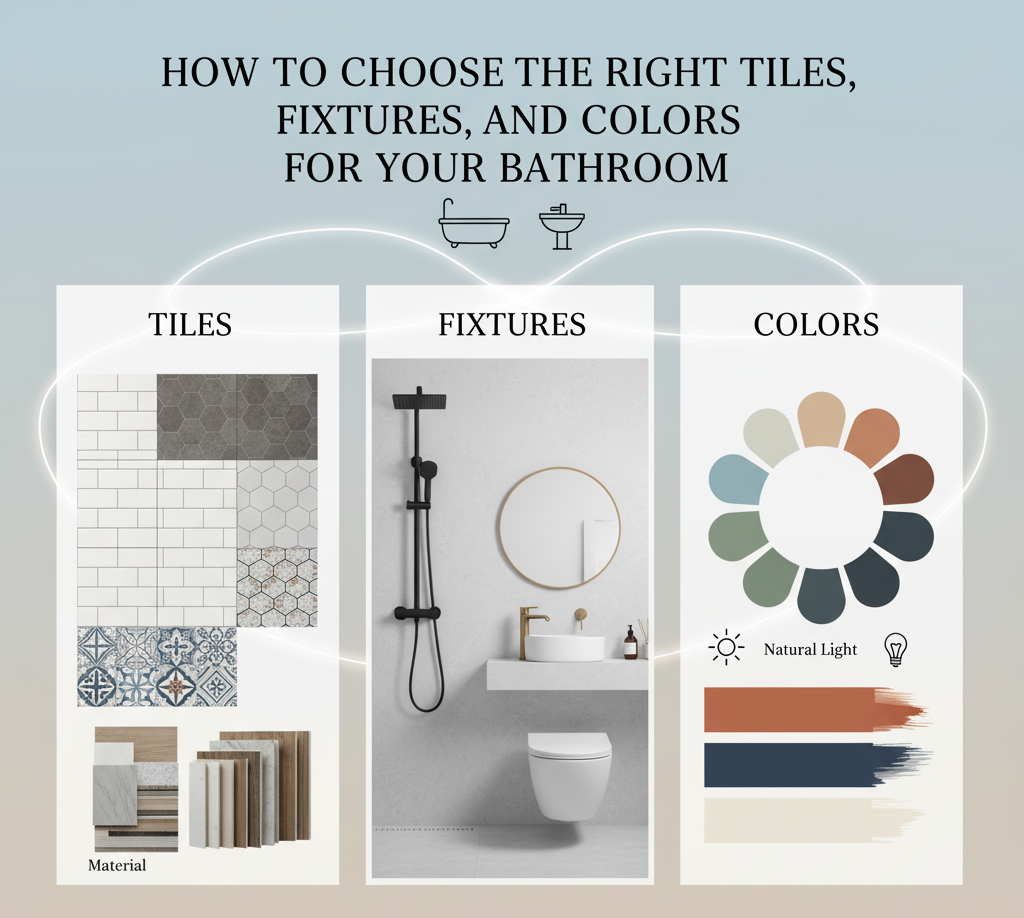
The bathroom is often overlooked during remodeling, with the focus defaulting to the kitchen and living room. But is it just a functional space? Absolutely not. Your bathroom is a personal sanctuary where you begin your day with an energizing shower and end it with a relaxing soak. Therefore, designing this room is about more than utility; it’s about crafting an atmosphere that feels like a true retreat.
To transform this essential area from an afterthought into a stunning haven, you only need to master the powerful trio of tiles, fixtures, and colors. Getting this combination right ensures you create a space that is beautiful and genuinely enjoyable to use every single day. Ready to unlock the secrets to your dream bathroom? Let’s dive in.
Choosing the Right Tiles
It’s essential to consider how the tiles will look in a damp area, as they are the most noticeable feature.
| Material | Best Use | Key Benefit | Design Note |
| Porcelain | Floors, Shower Walls, Countertops | Highly durable, dense, and least porous (best water resistance). | Excellent for a high-traffic or high-moisture primary bathroom. |
| Ceramic | Walls, Backsplashes, Low-traffic Floors | More affordable and comes in a huge range of colors/patterns. | Less durable than porcelain; best on walls and low-splash areas. |
| Natural Stone (Marble, Granite) | Feature Walls, Countertops | Unmatched elegance and unique veining. | Requires regular sealing and more careful maintenance. |
| Glass | Accent Walls, Shower Niches | Adds shimmer, depth, and reflects light beautifully. | Typically used as a decorative accent rather than for full coverage. |
Mastering Tile Size and Shape
The way you arrange and size your tiles can significantly affect how large and open your bathroom appears, setting the stage for your design.
For Small Bathrooms
Therefore, tile choices are significant for making a small bathroom look bigger. Specifically, for the floor, choose larger tiles, like 12″ x 24. In this way, this keeps the grout lines from being too distracting, making the room feel less crowded and bigger. Finally, put these up with shiny wall tiles to make the room look even bigger and brighter by reflecting more light.
For Large Bathrooms
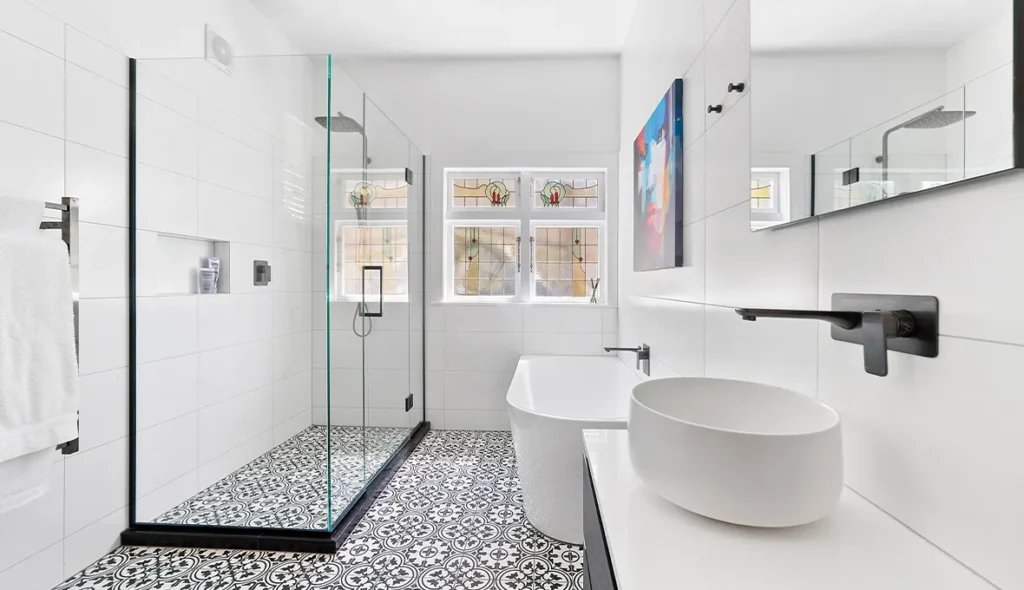
When it comes to big bathrooms, you can be creative and set up different areas while adding your own style. For a clean, smooth, and uniform look, use large-format tiles on the main floor and walls. Then add depth and style by installing a piece of mosaic tile on the shower floor or an interesting patterned tile on a wall that stands out.
Embrace Pattern and Orientation
Similarly, the flow is affected by how you arrange your tiles. For example, stacking tiles vertically or putting subway tiles vertically can make a ceiling look higher. Moreover, you can draw the eye across the room with diagonal or herringbone designs. Ultimately, they add depth and make a small space feel more alive.
The Power of Accent Tiles
Furthermore, in just a few key spots, use smaller, more artistic tiles (hexagons, penny rounds, or Zellige-style) sparingly. For example, you can add an accent tile without making the whole room look too busy in the shower niche, a thin horizontal band around the shower, or the backsplash on the sink.
Selecting Fixtures
The taps, showerheads, and fixtures in your bathroom are worth it. The room’s style will depend on the finish you choose.
Style and Finish Cohesion
Ensuring that all your metal finishes match is key to a well-designed bathroom. Pick a main finish brushed gold, polished chrome, matte black, or brushed nickel and use it on all your main features, such as faucets, the shower system, and hardware. Chrome and silver have a classic look that is easy to clean. Matte black gives things a modern, high-contrast edge, and brass or gold adds warmth and vintage luxury.
Introduce an Accent Finish Judiciously
Use the “80/20 Rule” to mix metals in the bathroom in a stylish way. The main finish should cover 80% of your equipment, such as all plumbing parts that work. To finish off the last 20%, you can use a different finish on just one or two non-plumbing items, such as a light fixture or a mirror frame. Importantly, don’t mix more than two types of metals. This will keep the room from looking disorganized or jarring.
Prioritize Functionality of Key Plumbing Types
When choosing plumbing parts, efficiency and usefulness should be more important than looks. Choose faucets and showerheads that are Water Sense-certified to ensure they use less Water without reducing flow. When choosing a mount, please give it some thought. Wall-mounted choices look good and save counter space, but deck-mounted ones are easier to set up. Lastly, make sure that the finish on your shower system’s fixed head, luxurious rain head, or handheld unit matches the central opening so that the whole thing looks good.
Choose Sinks and Toilets for Style and Maintenance
Your sink and toilet are essential for functionality and should also look good and be easy to clean. When picking a toilet, make sure it’s easy to clean. Skirted models hide the pipes and are easier to clean than regular ones. Choose a vanity sink style that complements your design. For example, an undermount sink is easier to clean than a vessel sink, and a vessel sink makes a bold, high-end statement.
Choosing the Perfect Colors
Color significantly influences the mood, from energizing to relaxing. Use the 70/20/10 Rule as a guide:
- 70% Dominant Color: (Walls, Floor, Main Tile)
- 20% Secondary Color: (Vanity, Feature Wall, Countertop)
- 10% Accent Color: (Towels, Art, Accessories, Small Decor)
| Color Group | Effect on Mood | Tip for Small Bathrooms | Current Trends (2025) |
|---|---|---|---|
| Light Neutrals (White, Cream, Pale Gray) | Airy, clean, spa-like, tranquil. | Best choice! They reflect light, making the space feel significantly larger. | Warm beige, off-white, and cream are replacing cool white/gray. |
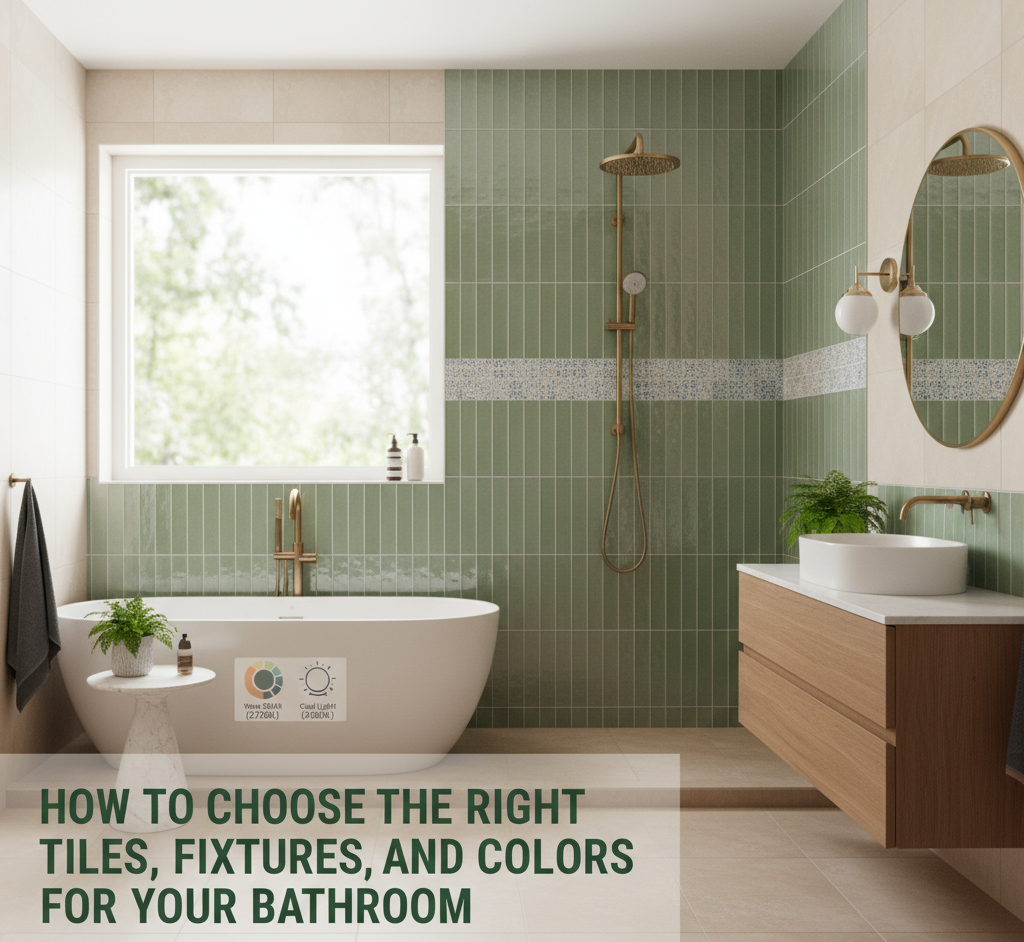
| Cool Colors (Soft Blue, Sage Green, Lavender) | Calming, serene, nature-inspired. | Excellent for creating a subtle, expansive feel, especially when paired with white trim. | Deep greens and earthy sage are very popular. |
| Dark/Moody Colors (Charcoal, Navy, Burgundy) | Dramatic, sophisticated, intimate. | Use on a single accent wall or paint the entire room (including trim) for an enveloping, cohesive effect. | Dark & Stormy aesthetic, paired with warm metallic fixtures. |
The Role of Lighting
No matter the light, the tiles, paint, and finishes you choose will always look different in color and texture.
Always View Samples in Your Space
When looking at design elements, keep in mind that the light in a store is not the same as the light in your bathroom. Before making a final choice, you should always look at all tile and paint samples in the real lighting in your room, both fake and natural. Colors and tones can change significantly throughout the day, so looking at samples at home is the only way to get an accurate picture of how the end product will look.
Understand Color Temperature
Indeed, you can really change the mood of the bathroom by choosing the type of light bulb and its color temperature. For instance, Warm White lights (2700K–3000K) make colors feel richer and cozier. Consequently, they are great for making master bathrooms more relaxing or going with warmer color schemes. Cool White/Daylight bulbs (3500K–5000K), on the other hand, give off a clean, bright, and energizing light that is great for areas where you need to do things like put on makeup and make cooler gray or crisp white finishes look better.
Layer Your Lighting Sources
To achieve an excellent bathroom design, first, use multiple light sources to eliminate shadows and enhance the space. Therefore, you should plan for three types of lighting: ambient, task, and accent. Specifically, ambient lighting gives off a general glow, like recessed ceiling fixtures; in addition, task lighting directs light to specific tasks, like sconces on either side of the mirror for perfect makeup application; and finally, accent lighting uses decorative fixtures to draw attention to architectural features, like lighting inside a shower niche or under a floating vanity.
Consider Natural Light Exposure
The direction of your bathroom significantly impacts the colors you choose. You can choose rich, darker tiles and paint for your room if it gets a lot of natural light. But if the room doesn’t get enough natural light, choose shiny, light-colored tiles and pale paint. These materials reflect light, preventing the room from feeling too small or dark.
Conclusion
Designing your bathroom is an opportunity to create a personal sanctuary rather than just a utilitarian room. If you carefully consider the power trio of tiles, fixtures, and colors, and know how to use lighting well, you can create a space that looks great and fits your needs perfectly. Remember the main ideas: Choose long-lasting materials like porcelain, ensure the finishes on your metals are consistent, and pick a color scheme that sets the mood you want, whether it’s calm or dramatic. With this thoughtful approach, your bathroom goes from being a convenience to a place you look forward to every day. Are you ready to make these plans come true? Please contact Prolific Construction right away to set up a meeting, and let our experts help you from the idea stage through to the completed project.